FYPM

I am not at all blaming those caught in this terrible situation as itโ€™s a systemic problem and imagesdemands societal-level solutions, but Iโ€™m very mercenary when it comes to employment.

John Scalzi and I share the same mindset: Fuck you, pay me.

Again, itโ€™s not these peopleโ€™s fault they they are attempting to do something they probably love and are being exploited in the process.

However,ย  itโ€™d only take me about a year doing that before my FYPM gene kicked in and I boogied on out of there.

Itโ€™s why I switched from being a proofreader to going into IT. Yeah, I like IT a lot but I loved proofreading and if that field paid as much as I can make in IT or even near it, Iโ€™d still be a proofreader or editor today. I wish in a better world I couldโ€™ve kept IT just as a hobby.

But check this out. I charge as much for my hourly rate as I made in an entire day as a proofreader.

Thatโ€™s right. I can work for an hour now and make as much as my otherwise-great proofreading job.

Fuck you, pay me.

In an economy like ours, thatโ€™s the only way to do it. Have to be as mercenary up to the limits of your power as you can be.

Lost it

Re-watching the first few episodes of Lost, I realize again what makes a good TV show is more even than well-considered dialogue or plot, at least for me: it must spend time with its characters.

Not in the sense of even the direct interactions of the characters, or even the time spent on screen, but how the director holds the shot to reveal crucial information.

Too many directors, perhaps raised on the hyperactive jump-cut MTV video culture, cut the shot much too soon. That rarely happens in Lost. There is always some little flourish or grace note that reveals facets of a character that would be omitted from most TV shows and movies.

Being that it pervades each episode of the show through multiple directors, this must have been a diktat from the producers or show-runners.

And it really works. Lost would not have been really as good or as compelling without this. Itโ€™s one of the reasons Lost feels like Lost.

In many parts, itโ€™s more like a play than a movie or show. It has such a different atmosphere for just this reason.

220ppi

Apple just released a 27inch iMac with 220ppi, on a 5210×2880 screen.

Damn.

DO WANT.

Thatโ€™ll be the best thing ever for reading on the desktop.

Apple basically said, you commoners, you can have your 4K. Weโ€™ll have 5K.

And to those who will inevitably say it is useless: I can use it, right now. Good fonts are really important to me. The high-PPI screen on my iPad changed my reading immensely. It is far far better than a physical book. The fonts are perfect.

This will do the same thing for the desktop.

Nigerian Pidgin

The poster below is in Nigerian Pidgin. Though itโ€™s called Nigerian Pidgin, in this form itโ€™s probably actually a creole.

I love this. Stuff like this makes a language geek high.

Donโ€™t worry, I wonโ€™t geek out too much but the poster has one of my favorite language features and that is reduplicative intensification.

*takes off language geek hat partially*

The words โ€œwell wellโ€ are a good example with this. Especially tending to emerge from chimeras of languages that have very different intensifier formations, youโ€™ll often see doubled words used as intensifiers. In this sense, it means โ€œextremely well.โ€

Iโ€™ll often use reduplicative intensifiers in my own speech with people I know well. In the instances that Iโ€™ve accidentally done so in the presence of strangers or acquaintances, that hasnโ€™t gone so well.

But check out the poster.

vlAH7Kq

(Yes, this poster is real and yes it is an official language of Nigeria. And itโ€™s also awesome.)

True

This is not hyperbole, though many people will describe it as such.point

Itโ€™s a fact thatโ€™s often been minimized, denied and made fun of, but in our society which runs foremost on information and access to it, the one who controls this information controls the society.

Absolutely self-evident, but people will quibble about it, not realizing or perhaps not wanting to realize out of mental self-protection just how much their life is ruled by this reality.

Which is exactly why the Comcast-Time Warner merger is so dangerous.

The pending acquisition of Time Warner cable would give Comcast control of almost half the cable television households in America. The pending destruction of net neutrality by the FCC would provide Comcast, the largest broadband provider in the United States, total control over the use of the Internet by the American public.

Yep. With more than 50% share, the baleful monstrosity that would be Comcast-Time Warner could and would dictate internet policy in the US.

Whatโ€™s left of the free and open internet would be shredded posthaste.

Swindle

Hereโ€™s where the neoliberals come to steal your water.water-art-wallpaper-3

Think Iโ€™m exaggerating? Read the article.

This is the first push โ€“ at least in the Western world โ€“ for water to be privatized. It is couched now in innocuous language like โ€œfree water for the users who value it moreโ€ but what it means is that water systems will be privatized and the prices will be raised to unaffordability for many Americans.

Else, why would it spend half the article or more talking about consumer use of water, when that is only 10% of total water use? The rest is all agriculture or industry.

To be fair the article does spend time discussing agricultural uses of water which are by far the largest, but spending time talking about domestic water use is sort of like worrying about the cruise shipโ€™s bridge windows being broken while an iceberg tears a jagged gash in the hull.

In other words, reducing consumer demand to zero will barely make a dent.

As I said, what this article is really all about the coming push to privatize water and then extract rents from that effort. This is the propaganda vanguard for that push.

Just as happened with charter schools. And prisons. And so many more things in America and the world.

Itโ€™s coming, and itโ€™s probably inevitable.

Things I love about Tumblr

No, seriously.

I criticize Tumblr a lot but thatโ€™s because I read it a lot. More every day.large-7

Hereโ€™s the things I love about it:

1) Gives me the chance to read and to learn from people I never wouldโ€™ve otherwise โ€“ people who historically have had no voice and no way to express themselves.

2) Itโ€™s a great place for righteous rage, which I enjoy. People feel more unrestrained there. I like evidence and good argumentation as much as the next nerdy white guy. But sometimes I like to let it all hang out, or let someone else do the same.

3) It reminds me of the early internet, when it was still a Wild West (in a good way) but before the worst of the misogynists had begun bedeviling and chasing women away.

4) It has a lot of women. And in general I feel more in common with women than I do with men. Criticize me as you will for that, but itโ€™s true nonetheless.

5) Though animated gifs mostly annoy me, I can be exposed to art there that I otherwise would not get to see. Itโ€™s not heavily censored so it really is a mรฉlange of just about everything, which fits my broad tastes.

Basically Tumblr reminds me of the early promise of the internet, before it was utterly corporatized (yes, I know Yahoo! now owns Tumblr, and will therefore probably eventually destroy it). It is freakish, odd, and everyone does just about whatever they want there and anyone can use it.

So thatโ€™s why I love Tumblr. Really.

Fat

The fat acceptance movement I have no problem with. Shaming people for their appearance is a terrible thing and is also counterproductive.

However, it seems that the FA movement has morphed mostly into the fat celebration movement and the fat denial movement.

This I donโ€™t understand.

By fat denial, I mean that most of the movement now seems to be intent on disseminating the notion that fat, health and quality of life are in no way related, when the evidence shows a pretty clear relation.

Iโ€™ve been fat, and Iโ€™ve been skinny.

Trust me here — skinny is way better.

Just refreshed

Iโ€™ve just refreshed or earned a bunch of new IT certifications in the past few months. Most of imagesthem Iโ€™d already gotten about a decade ago but theyโ€™d all expired or even if not expired were no longer relevant.

I passed seven exams in just over eight weeks. I have all day every day to study is why the prodigious pace. I wouldnโ€™t recommend it to anyone else. On average (though itโ€™s hard to judge since I jump around a lot) I studied about 10 hours a day, seven days a week.

This post isnโ€™t to brag โ€“ though I am proud โ€“ but to say that these certification exams are MUCH MUCH harder than when I took them in the early- to mid-2000s.

There are far more details, they are much more comprehensive, and they are far more fiddly and more specific in minute areas of IT knowledge, and so therefore as mentioned are much harder to pass.

In fact a few of these same certification exams I took in the 2000s I walked in having studied nothing and passed with near-perfect marks.

There is no chance I could do that today. Absolutely none. I wouldโ€™ve failed miserably. I wouldโ€™ve been able only to guess at a few questions.

So if you are thinking of taking any of the Cisco, Microsoft or even VMware certifications, you better really know your stuff or you will fail.

WinnatsPassWhen I heard that these exams now had a 50%+ failure rate I didnโ€™t believe it since I remembered how easy theyโ€™d been in the 2000s.

Well, I am glad I studied my ass off anyway because it turns out that some of the exams apparently in reality have an 80-90% failure rate now.

Each one costs $150 or more, so failing is not an option.

So as a warning if you took any of these class of exams more than five years ago, be aware that they are not the cakewalk they used to be. One of them was the hardest exam Iโ€™ve ever taken anywhere.

(Iโ€™m prevented by NDA from being more specific; they can and will revoke my certifications if I reveal more details than I have in a public forum like this. Dumb rule? Yes. But nothing I can do about it.)

Ha, what?

This article doesnโ€™t understand one crucial thing about bicycling in the US.

Americans have a mental block about bicycling that’s mentioned again and again by industry insiders.

No, Americans have a mental block about not dying in the fucking road as will happen if you ride your bike in most places.

In fact where I grew up (as in many other places in the South), people will deliberately try to scare you and/or run you over if you are riding a bike in or even near the road.

Original sin

Iโ€™m not sure the point of nor the possible helpfulness (for anyone) of telling men that they aremonet innately bad?

I mean, it really doesnโ€™t matter that much to me. But I am atypical. I do the right thing even if the entire world tells me I shouldnโ€™t.

Mostly, though, among typical people it will just drive men (and some women) away from the feminist movement and eliminate needed allies.

Some men involved in the feminist movement are terrible? OMG, some people are human, and there are bad ones everywhere? No, really? Get out!

Too much of too many movements is about maintaining tribal purity. I donโ€™t care a whit about that.

And this part is just absurd.

But even if Clymer and Schwyzer somehow published and promoted nothing but Sensitive, Correct, Good Takes (a feat that would be almost magical for anyone working on a contemporary online-publishing schedule), theyโ€™d still be taking up space that a woman might have otherwise occupied.

Life isnโ€™t a zero sum game. This is extremely fallacious logic. When I start a blog, it doesnโ€™t imagesknock someone off the internet. When I open a Twitter account, it doesnโ€™t destroy someone elseโ€™s.

Thereโ€™s no way to win in this โ€“ not for women, and not for men: if you say you are a male feminist and/or ally, you are automatically now Hugo Schwyzer, just trying to get laid (even though for 99.999% of men that does not work) and a sociopath, or if you declare yourself not a feminist you are also bad.

As I said, no way to win.

But as I also said, I donโ€™t care, other than the movement is hurting itself. I will still help women succeed and prosper however I can, and to fight for an equitable society.

Itโ€™s just that the views of people like Kat Stoeffel are hurting that, and not in any way helping.

Strayed

There could have been some cogent thesis in here. Could have been, but wasnโ€™t.emily_dickenson colorful

If this professor had discussed โ€“ with any sort of evidence to back it up โ€“ how reading on a screen might differ from reading a physical book, for instance, at least the essay would have had some meat on its clattering bones.

(Personally I think this effect will disappear over time as e-readers become โ€œreadersโ€ and physical books become odd, rarely-used objects.)

Instead the piece to which I linked attempts to throw a bunch of quotes and allusions at the problem which all basically amount to โ€œtechnology bad.โ€ Which, maybe it is. But it takes more than just personal distaste to demonstrate that.

I straddle the line of empiricism and the humanities. Iโ€™ve always been deeply interested in both the scientific and the artistic. I never saw any reason to specialize, so itโ€™s easy to see the flaws and blind spots implicit to both worldviews.

adornoEmpiricists often deny anything that is not quantifiable. Deny it even (and sometimes especially) when it is obvious, ever-present and immutable. This is a fatal flaw in their construction of the world, and why so many people (contrary to many articles Iโ€™ve seen lately) distrust scientists.

However, humanities scholars often elevate the personal and non-evidential experiences to primacy, ignoring all else.

The linked essay commits the latter error, and more.

Why does the professor not just admit they are a traditionalist, and be done with it? Thatโ€™d be more intellectually honest and hard to argue with. But instead, they feel the need to toss out the old worn Adorno quotes and call it an argument.

Not good enough.

As for me, Iโ€™ve read more long-form pieces and thought about them more deeply in the years since Iโ€™ve gotten my iPad than I have since my mid-20s. Itโ€™s the best thing that has ever happened to my reading life.

Intention

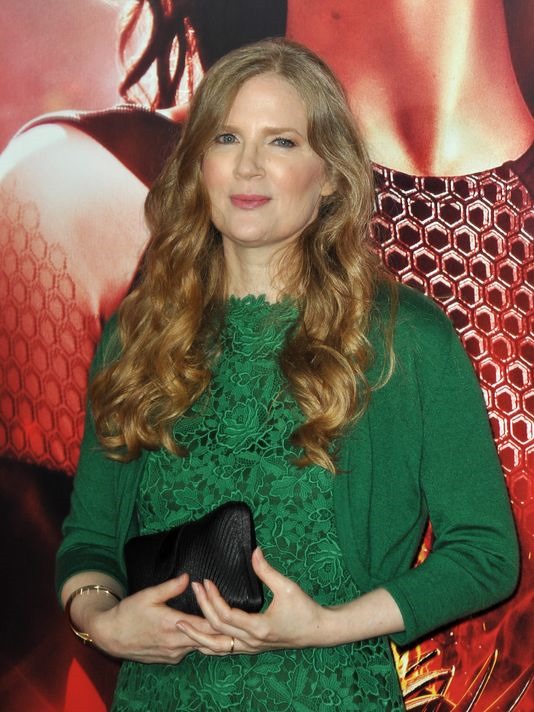
Yes, this is completely true. I really dislike linking to a series of tweets as I think Twitter is a terrible platform, but this time Iโ€™ll make an exception. And for brevity and non-annoyance Iโ€™ll SuzanneMidcombine some tweets, but keep the formatting.

in the 1800s “british lit” basically did not exist outside of poetry because so many novelists were women and so you can find these old screeds written by male academics of the time dismissing “that most perfidious and immaterial of things, *the novel*”

50 years before british intellectuals made Shakespeare their Homer they were calling his plays trash because women liked to go to them

the hunger games books are exceptionally good examinations of the healing and harming powers of ritual, regionalism, cyclical oppression but it will be about 25 years before someone with cachet in the lit crit field “discovers” that,ย  because they’re “aimed at young women”

people trash her prose because they assume its quirks and occasional awkwardness are products of inexperience, not intention

Exactly. The prose is awkward in places because those are Katnissโ€™s thoughts. Katniss is sixteen years old. Iโ€™ve read other works by Suzanne Collins and the prose is much much (vastly!) different.

There is a reason for that. She is a pro, not some amateur pounding away fecklessly.

And just like much that was seen as โ€œtrashโ€ is now โ€œgrand, dignified literature that no one dare question,โ€ I think The Hunger Games books (though probably not the movies) will stand the test of time.

Collinsโ€™ prose is deliberate; I recognized the literary techniques she was employing because I care about such things, but they are subtle so I was not surprised more didnโ€™t notice.

I was however astounded that people who should’ve noticed did not. Bias does strange things to peopleโ€™s brains.