More Than Wrong

More than 70% of economists and fund managers blame tariffs for market sell-off.

More than 70% of economists and fund managers are wrong.

The tariffs have had only a minor effect. The real reason for the sell-off is the rise in interest rates, some earnings misses, QE being wound down to some extent and uncertainty related to the Fed. The prospect of all the free money being much more expensive and the unwinding of QE are the real culprits here. Don’t be misled by punditry. If they knew what the hell was going on they’d be trading, not writing articles and making videos.

Banhammering

In the debate over what restrictions should be placed on tech platforms in regards to permitted speech, both sides are in favor of technical solutions rather than the much-more-difficult cultural and societal ones.

What I mean is that there is much effort placed into controlling who gets to say what when and under what conditions, as if this could correct any of our problems when there is little if any effort into examining what caused such polarization, such anomie, such disconnection from society in the first place.

It’s as if the house fell down around and us and we blamed the mouse chewing on the floorboards for the problem. Sure, it was probably contributory to some small extent but it’s just a scapemouse — far larger issues caused the actual collapse. This focusing on tech platforms rather than society’s ills is just another method of distraction and of avoiding the actual issues. Ban this person, run that person off of Twitter with a mob attack, deny this person’s right to speech with an algorithm, and all our problems will somehow solve themselves.

I can tell you that is not going to work out as planned.

Risk and Loss

This is a good analogy I will use for attempting to explain why it’s worth doing quite a lot about climate change even if you think it’s likely to be no big deal:

People appear to have extreme problems not only reasoning about risk when the consequences are remote in time (erroneous future discounting) but when the results will be calamitous beyond the ability to imagine. It’s thus worse when those effects are not only distant in time but distant both chronologically and consequentially from some easily-imagined state (for instance, living in an okay house versus becoming a climate refugee or a child dying due to climate-change induced infrastructure failures). Needless to say, this misprices the risk substantially as even a 1 in 10,000 chance of a hugely negative outcome is worth devoting substantial resources to prevent or to at least ameliorate.

Crush

“In Sparta, in the third century BCE, a fissure had opened up between the ruling elite and ordinary people in the two centuries following the stateโ€™s victory in the Peloponnesian War. Those who were ruled demanded change because the gap between rich and poor had become too large to tolerate. A succession of radical monarchs, Agis IV, Cleomenes III and Nabis, created a structure to help revive the state. Nobles were sent into exile. Debts were forgiven. Slaves were granted their freedom and the franchise. And land confiscated from the rich was distributed to the poor (something the European Central Bank wouldnโ€™t tolerate today).

The early Roman Republic, threatened by this example, sent its legions under Titus Quinctius Flamininus to crush Sparta.”

-Tariq Ali in The Extreme Centre: A Second Warning

Not Lacking Tracking

For those who say there’s not a lot of tracking and surveillance in Microsoft’s products, why would a domain controller need to contact various places at Microsoft so many times in less than 11 minutes? And this happens day in, day out, 24 hours a day.

I have it all blocked, of course. Two different ways: at the DNS level and at the firewall. That’s why it’s in red (in this case, from pihole). But I’ve been told that I am paranoid; another instance of gaslighting about these issues that is so common now. But it’s not paranoia if it’s happening.

Hating Peace

I didn’t realize how much contempt I should’ve had for people I thought I admired before Trump started pulling out of Syria.

It doesn’t matter at all why Trump is exiting Syria and ending our forever wars. That he is doing it — or at least attempting it — is what matters. He will be resisted at every turn and might not succeed; however, even if he’s doing it because he wants to buy a whole retinue of furry costumes and yiff with Jared on the White House lawn, he’d still be a better president than Obama as long as he does this and starts no new wars.

Very sad to see. But most people are not intellectually consistent to any degree at all. As long as their bullshit team wins, they are happy.

Fit For Purpose

I was reading this wrap-up of the fifteen best episodes of TV shows from 2018 and I was thinking that I was going to throw a right fit if the sixth installment of The Haunting of Hill House wasn’t on there. But it was, and the writer — Liz Baessler — waxes most eloquently about that episode.

But itโ€™s the sixth episode, โ€œTwo Storms,โ€ that stands out not just for its storytelling abilities, but for its sheer technical achievement. After five episodes devoted to each of the five Crain children, this sixth sees them all together with their father possibly for the first time since the night they left Hill House, 25 years ago. The episode is a series of single, ultralong shots of meticulously choreographed movement performed by the entire Crain family on two very different stormy nights. Itโ€™s an unabashed flex of creative and technical ability, but itโ€™s one thatโ€™s executed exquisitely, and rather than fighting against or defying the television format, it celebrates it, stirring together information parceled out over the past five episodes and holding itself to a single episodeโ€™s runtime. It expands the bounds of what tv can accomplish while reminding you, again and again, that it is tv. Itโ€™s beautifully done, and the way it draws out the Crainsโ€™ tension and grief, stretching it unbearably thin until it finally snaps with the first visible cut in 50 minutes, is incredible.

After watching that episode I was just like “fuuuck.” There are some works of art that, even if you like them or love them, you think, Yeah, I could do that. It’d be hard but that’s achievable if someone gave me the time and resources.

And then there’s art like “Two Storms” where you realize that, no, you could not do that with any amount of time, money or resources. It’s just not possible. What an amazing bit of TV and an exultant piece of art. I’d hold that episode against any other major achievement of the Western artistic tradition and argue that it doesn’t need me, for it in fact holds its own.

That’s one of the few TV episodes I have ever in my life watched, sat there for a few minutes stunned, then watched it again.

What’s so particularly marvelous about it is that if you aren’t a huge movie/TV nerd like I am, it’s all done so seamlessly that you won’t even notice it consciously. This was not the directors or writers showing off — all of the technical and artistic wizardry is done solely in service of the character arc instead of some demonstration of ability. It’s not for some sizzle reel. No, it’s to tell a better story. And that’s what makes it so wonderful.

What a great episode. What great art. There is magic in this universe and this is it, right here.

Corvid Comestible

Eat some damn crow, and then shut the fuck up. There was much gaslighting about this, against Nicole, me, and other people who said, “You know, Facebook is run by a sociopathic asshole and anything to do with it is surveilling you, right?”

And then we were told we were paranoid, that there was just no way that such widespread privacy violations would or could occur, that it was inconceivable (no, I do not think that word means what you think it means) that a company could get away with such things.

Well, motherfuckers, you were wrong and we were right. Now for real shut up and listen to some people who know what the hell they are talking about and how the world really works.

Bird Box

Bird Box is a very good film.

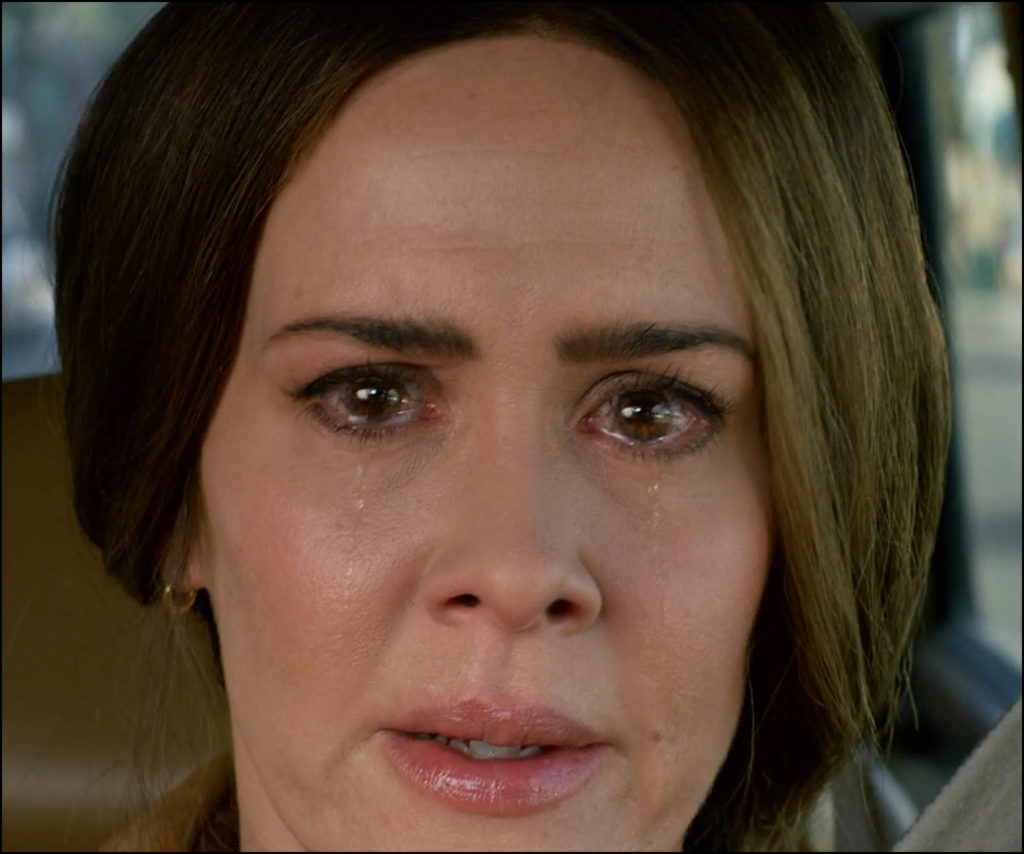
Director Susanne Bier manages to capture something true and meaningful with the aid of Sandra Bullock and Sarah Paulson. Even though the two shared less than five minutes of screen time, their rapport and chemistry as two sisters witnessing the beginning of the end of the world grounded the movie in its own urgent reality. Then the reality metamorphosed without our noticing into its own devilish little universe that Bier reveals in breaths of wind, literal hair-raising, and the fear of not what we cannot see but what we can but should not gaze at.
Just as importantly, Sandra Bullock, who portrays Malorie, is a woman who is not at home anywhere, but wants to be. Wishes she were. Even in her early roles, Sandra Bullock imbued her characters with a core of strength, of steel just below the surface, and Bier truly leverages this immanent indomitability that Bullock possesses. This is not a movie about a woman finding her power in a treacherous world. No, it’s a strength that’s already present, that needed no development, just like a cloak being thrown back to reveal the battered but still glittering armor beneath.

Importantly, this movie has respect for its characters. As humans do, sometimes they make stupid decisions. But they are human stupid decisions that make complete sense in the context of the movie and our own real world.

This is also a movie about the difficulty and danger of connecting with others. Malorie’s armor protects her but also, as armor does, keeps others at bay. It’s when the armor is removed that she’s at her most vulnerable but also the happiest. The most herself. It’s her realization of this that also parallels the river journey of the story. Bird Box, then, is a film about her understanding that not every approach is an attack — sometimes it’s a helping hand, an embrace, a gesture of good faith and common humanity. Difficulties connecting, despite all our ways to seemingly connect, is a theme of many movies of this era, and for good reason.

Bier understands that people can be hard but not assholes, that they can be tough but empathetic, that they can be nearly incomprehensibly stubborn and grumpy but still worth knowing and worth understanding. I have great sympathy for Bullock’s Malorie because I am myself stubborn and grouchy and difficult but there is nothing I wouldn’t do for my partner and my friends if they needed it.

I suspect it took a woman director to allow a character like Malorie to exist — few men would’ve demanded no cutesiness out of Bullock, while still permitting wonderful small moments of vulnerability, of care, and even delight, all without removing her agency and her reasons to be who she is. Malorie is now one of my favorite movie characters because rarely has such a very nuanced and deep personality as she is been allowed to exist in a woman character — and all in one who is both truly likable but also difficult, a bit annoying, grumpy and yet whose decisions and raison d’รชtre make complete sense.

Bier is a talented director who understands how to tell a story with economy and grace. Her shots cohere in a way that most don’t today in modern directorial trends. She eases and sometimes hurries the story along without condescending to or deceiving the viewer, and without wasting any time at all. She to her great credit makes every second of film count. Each shot is a story, and each shot furthers the story itself. It’s great storytelling in a way that has to be seen to be understood.

Now let’s talk about Sarah Paulson. She only has a little screen time but she grabs every second of that to show us the horror of the world that’s coming. Her dissolution in the face of the unseen threat is some great acting — and even more so because it’s so minimalist. And, trust me, it’s all the more persuasive for that. There’s no screaming. Only a little crying. Her body language and her despairing intensity convey so much that all the words in the world could not. I did not know an actor could credibly portray the complete extinguishing of a self, but Paulson does it and it’s horrifying. It’s a scene that firmly jerks the movie from a possible middle-age bildungsromanesque hero’s journey into a rout and a retreat — a defeat before the war’s even declared.

I highly recommend Bird Box. It held me rapt, as a good story should, and that is more than nearly all movies manage these days.

Rah Rah

“Contempt” is a good word for it. It is disgusting watching the same people who were lamenting our entry into Syria during Obama now bewailing our exit. Unfortunately, some of them were people I had admired.

I guess it really is for most people only about their team winning, and about party, not about the truth, or what’s right, or what is best for the country or the world. I just can’t work that way.

Ptroop

I didn’t realize this until I started looking at some sites for workout ideas to add to my own, that because, hey, paratrooper, what I considered a “light to moderate” workout is considered extremely intense to inadvisable by most sites. Ha.

Still feels fine to me. I honestly don’t know how to work out less hard. What would be the point?

Here’s some advice, though: most people can’t and shouldn’t increase for instance their deadlift by 62% in less than three months. I can because I’ve done it all before and as a paratrooper learned just where my limits were, how to walk right up to them and stop before crossing that line. That’s a learned skill. If most people tried to do that, they’d probably be in the hospital.

A lot of my shirts are already starting not to fit. Clothes shopping in the near future.

Housing

After looking at hundreds of houses online, this is the first one I’ve really, truly liked. I won’t say “loved” because I haven’t seen it in person. It’s much too large — half the size or smaller would be preferred.

But still, it’s the one house I’ve looked at and said, “Yep, I could live here.”

As my partner observed, it’s the first house we’ve seen that actually looks designed and not just cobbled together from whatever parts happened to be lying around. We’ve looked at houses from $200,000 to $2 million and other than being larger, the very expensive ones are nearly always no better than the cheaper ones — just matchsticks poorly slapped together with no cohesive design sense at all. This one is the exception.

This is the kind of thing we are looking for and I’ve found a grand total of one in the entire country so far. Yay. And even it’s not suitable because it’s much too large, though otherwise perfect.

GPSR

You absolutely cannot make it work without relativity being taken into account. Why is this even a question?

Because an observer on the ground sees the satellites in motion relative to them, Special Relativity predicts that we should see their clocks ticking more slowly (see the Special Relativity lecture). Special Relativity predicts that the on-board atomic clocks on the satellites should fall behind clocks on the ground by about 7 microseconds per day because of the slower ticking rate due to the time dilation effect of their relative motion [2].

Further, the satellites are in orbits high above the Earth, where the curvature of spacetime due to the Earth’s mass is less than it is at the Earth’s surface. A prediction of General Relativity is that clocks closer to a massive object will seem to tick more slowly than those located further away (see the Black Holes lecture). As such, when viewed from the surface of the Earth, the clocks on the satellites appear to be ticking faster than identical clocks on the ground. A calculation using General Relativity predicts that the clocks in each GPS satellite should get ahead of ground-based clocks by 45 microseconds per day.

The combination of these two relativistic effects means that the clocks on-board each satellite should tick faster than identical clocks on the ground by about 38 microseconds per day (45-7=38)! This sounds small, but the high-precision required of the GPS system requires nanosecond accuracy, and 38 microseconds is 38,000 nanoseconds. If these effects were not properly taken into account, a navigational fix based on the GPS constellation would be false after only 2 minutes, and errors in global positions would continue to accumulate at a rate of about 10 kilometers each day! The whole system would be utterly worthless for navigation in a very short time.

This is not hard to find out. The confusion I think arises because (most or all?) of the satellites and GPS itself doesn’t actually use Einstein’s field equations to compensate for relativistic effects because it would be too complex and not worth it. Instead, the GPS systems use clock corrections and various other hacks to fudge something “good enough” to avoid having to properly deal with relativistic effects. See here for more details (a bit outdated but still relevant).

So, as usual, the world is more complex than most people want to deal with. But in short, yes, GPS needs to compensate for relativistic effects to work correctly. No, it doesn’t actually use Einstein’s equations but again, yes, relativity matters here very much.

Tired of doing other people’s thinking for them, but I am better at it than they are, so….