Hire and Lower

When I got out of the military I was lucky I didn’t need a job — as I’d made a lot of money in the stock market — because all of this is true:

Typical interviews would be like:

Interviewer: We are looking for someone with office experience.

Me: I worked in an office for nearly five years, creating press releases, reporting stories, escorting reporters and dignitaries, conducting public relations worldwide, and researching relevant topics for command.

Interviewer: So you didn’t work in an office because you were in the army.

Me: I just told you I worked in an office nearly every day. I just did a lot of other stuff too. I generally worked 12-16 hour days.

Interviewer: But how could you work in an office and be in the army?

Interviewer: Describe your experience with budgeting.

Me: For the last two years of my career, I was responsible for a $180,000 budget that covered all training, deployment, equipment and miscellaneous expenses.

Interviewer: So buying guns and stuff?

Me: What, no? I’m talking about computers, office equipment, that sort of thing.

Interviewer: So who bought the guns?

Me, shaking my head: The gun buyer??

Interviewer: Have you ever managed people?

Me: For the last three years of my military career, I was team lead (not what it’s really called in the military) for all the journalists and public affairs staff in my office.

Interviewer: No, I mean managed people when they didn’t have to do what you say.

Me: That’s not really how the military works. Anyway, I worked with paratroopers only — no paratrooper just does what anyone says, or they wouldn’t be paratroopers. I actively managed five to seven staff for those three years.

Interviewer: So they just had to listen to you.

By the way, those conversations above were all real as best as I recall them. Civilians are utterly clueless about the military and how it works. So much so that it’s comical — except when you’re looking for a job and those bizarre and hilarious misconceptions bite you right in the ass.

Start Is Where

Yeah, this person has experienced the horrible trauma that is tech support:

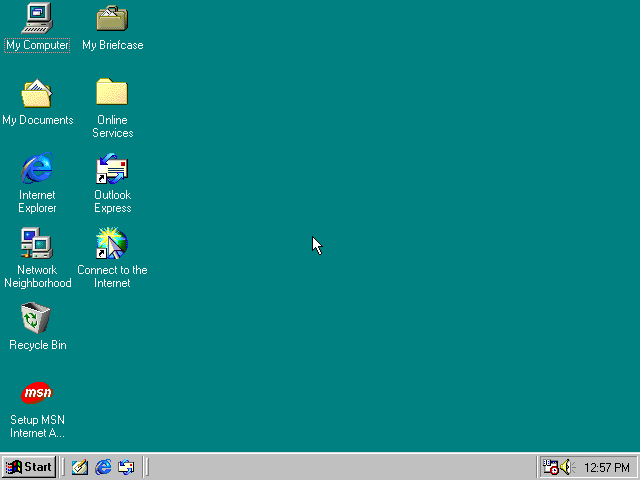
I think my record for telling someone how to find their Windows start menu on a single call is right around 10 times — where they actually found it, anyway. More than a few never could. And this was the era when it actually said “Start” on it as plain as could be. Apparently using a computer prevents many people from tasks like reading or having a functioning brain.

No one could ever explain to me why I should give someone a pass for supposed lack of technical ability when they can’t find the word “Start” on a screen that looks like this (this is Windows 98 SE):

Equi

Is Canada to become a poor country?

I doubt it, but its housing situation is an enormous drag on the entire economy and is a deadweight loss. This makes everyone poorer than they otherwise would have been — even those who got “richer” from housing wealth (definitionally, that is what a deadweight loss does).

We’d been considering immigrating to Canada but have pretty much thrown that out the window due to the state of the Canadian housing market in any desirable and non-frigid city. Our standard of living would be worse and would be in decline, as are most Canadian people’s (no matter what the official stats say).

The US isn’t doing well at housing either — but Canada’s mismanagement of it is a whole other thing that I want no part of.

Gen Gen

I started reading Rob Harvilla’s book 60 Songs That Explain the ’90s and it has already, for me at least, started off on the wrong foot.

Did you ever notice that new music, now, is nowhere near as great as the music you loved as a teenager? And you know what? Youโ€™re right. Whether you were a teenager in the โ€™60s, the โ€™90s, or the 2010s, youโ€™re right. The music you loved as a teenager is the sweetest music youโ€™ll ever hear; that music will be, in all likelihood, the greatest, wildest, purest love affair of your whole life. Thatโ€™s how music works; thatโ€™s how being a teenager works.

Does it? I guess for normies. I think music now is pretty damn good, though, and I listen mostly to works from the last few years — though I take in an insanely broad range of music. When I was a teenager music helped me cope with my often terrible and traumatic daily life but I don’t think music from that era was the greatest ever made. I’m grateful it existed, though. I am not sure I would’ve made it through without Tori Amos, The Sundays, Mazzy Star (et al.) And while I still listen to those artists and others from that time, there are equally many great artists now doing completely different things that are just as magical in their own way. (For instance, Baby Queen — Arabella Latham — is really, really fucking wonderful.)

The 90s was the last era in most people’s living memory where we thought a global and egalitarian belle รฉpoque might be possible and that does matter for the music of the period and all else — that’s not just nostalgia. But music is much more diverse now and more interesting than it was then, and more accessible. That matters a lot.

Growing up in rural North Florida as a complete misfit, my life was pretty miserable in a lot of ways. Music helped me survive it. Now, though, music adds joy and depth to an already-lovely life and I think that’s far better. I wouldn’t go back, for so many reasons, and I’m glad I’m not mired in the past musically. I was thinking the other day that music is the best of humanity realized. So here’s to the music of the now and all the artists still creating it.

Libros

They Want to Kill Libraries. The Last Place in America Where You Are a Person, Not a Customer.

I’m honestly surprised libraries are not dead already. Even a lot of so-called liberals dislike them because they “infringe copyright” — and for some reason many libs are a member of the weirdo copyright cult that believes that legal subsidy to now (mostly) corporations trumps human rights or having a decent civilization.

Paginas

The Lord of the Rings is a book* that many people complain is too long but is actually far, far too short. Should have been 10,000 pages. Even though I love it, the works feels strangely truncated and abridged; there was so much world and story left to explore.

*It was always intended to be one book, but the publisher forced Tolkien to split it into three volumes.

Tbab

I think when you grow up rough like I did, the idea of someone claiming to be a little tiny baby until they were 30 or 35 or whatever seems absolutely insane. Because you have to know who you are early to survive my kind of childhood. Nothing else allows it.

When people are worried about a dinky three year age gap (or even a much larger one, as long as both are adults), it just seems crazy. But I think normals really are perhaps that weak and fragile often, and unformed. It’s hard for me to understand because I just have never been that way and none of my friends, even the much younger ones, have either. I don’t tend to associate with weak people or those who don’t know themselves well. Just not my thang, really. Those wilting flowers and I have little in common.

Fail to Ban

As social media and smartphones exist now and are likely to exist in a hypercapitalist system, it’d be a huge net overall societal benefit and individual benefit if both were banned or never in fact existed.

They are harmful psychologically and socially and are akin to a supernormal stimulus in animal behavior that causes an organism to respond maladaptively to something it is not evolved to deal with. If neither had ever been created we’d be much better off.