I think Jane is nearly-totally wrong here. Below, I’ll explain way.
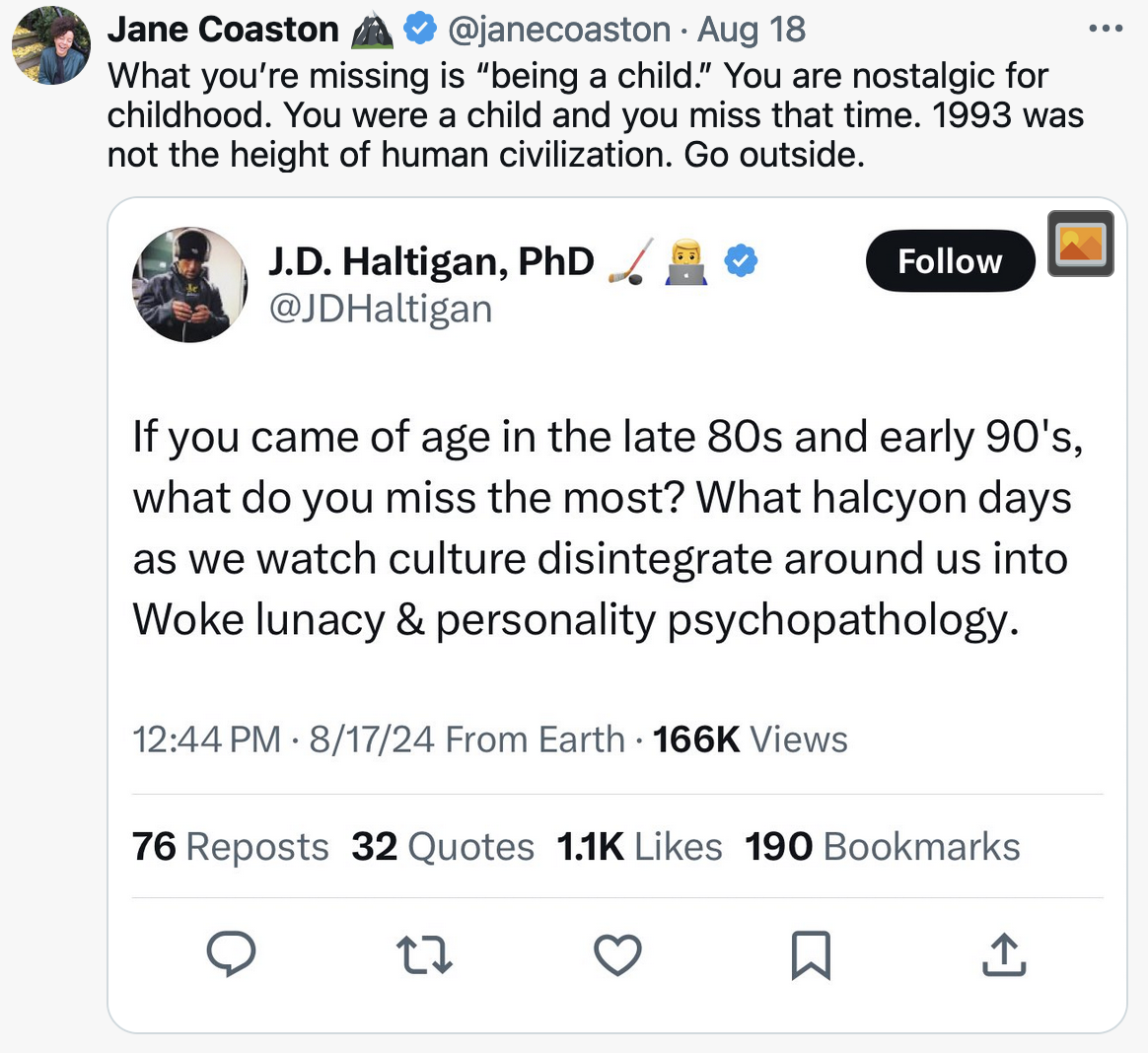
She’s right about one thing: the 1990s was not the pinnacle of human civilization. However, particularly if you were straight, the 1990s was a pretty great time to be alive no matter your circumstances as a child or adult. That’s because it saw the end of the Cold War and it was an era of (mostly) peace and, importantly, of tranquility after a long stint of dread and fear. The nuclear shadow we’d all been crouching under for forty years receded; it felt like we were far less likely to perish in a globe-spanning nuclear conflagration. Many people had been living with the inevitability of that since the 1950s. Jane is 36. Like Florrie, she’s too young to recall any of that, so she has absolutely no idea what that was like (and it really shows).
I remember talking on the playground with kids in the fourth grade about how we hoped we died quickly when we were nuked, as who would want to live after that? That’s not a normal thing for nine-year-olds to talk about, don’t you think? I wonder if Jane thinks kids of that age discuss such topics now. I am quite sure they do not. But it was common back in the 1980s.
Second, the 90s were a time of just great optimism and unbridled hopefulness. Yes, even for adults. It felt like we were on the way to solving all our problems, that some glorious future was just ahead of us, and that all of us were building it. The whole culture was just bursting with that notion. Hell, even the “pessimistic” stuff from that era seems almost comically optimistic now in retrospect.
Jane is wrong, but is both too young and too lacking in wisdom to understand why and how she is wrong. Sure, just plain nostalgia is a thing. And I don’t agree with J.D. Haltigan’s take, either. But it’s possible for two people to be wrong. And Jane is just an absolute bellend here in all ways someone could be one.