First a quote, then I’ll put the moon rover in gear and we’ll get where we’re going.
“The purpose of studying economics is not to acquire a set of ready-made answers to economic questions, but to learn how to avoid being deceived by economists.”
― Joan Robinson
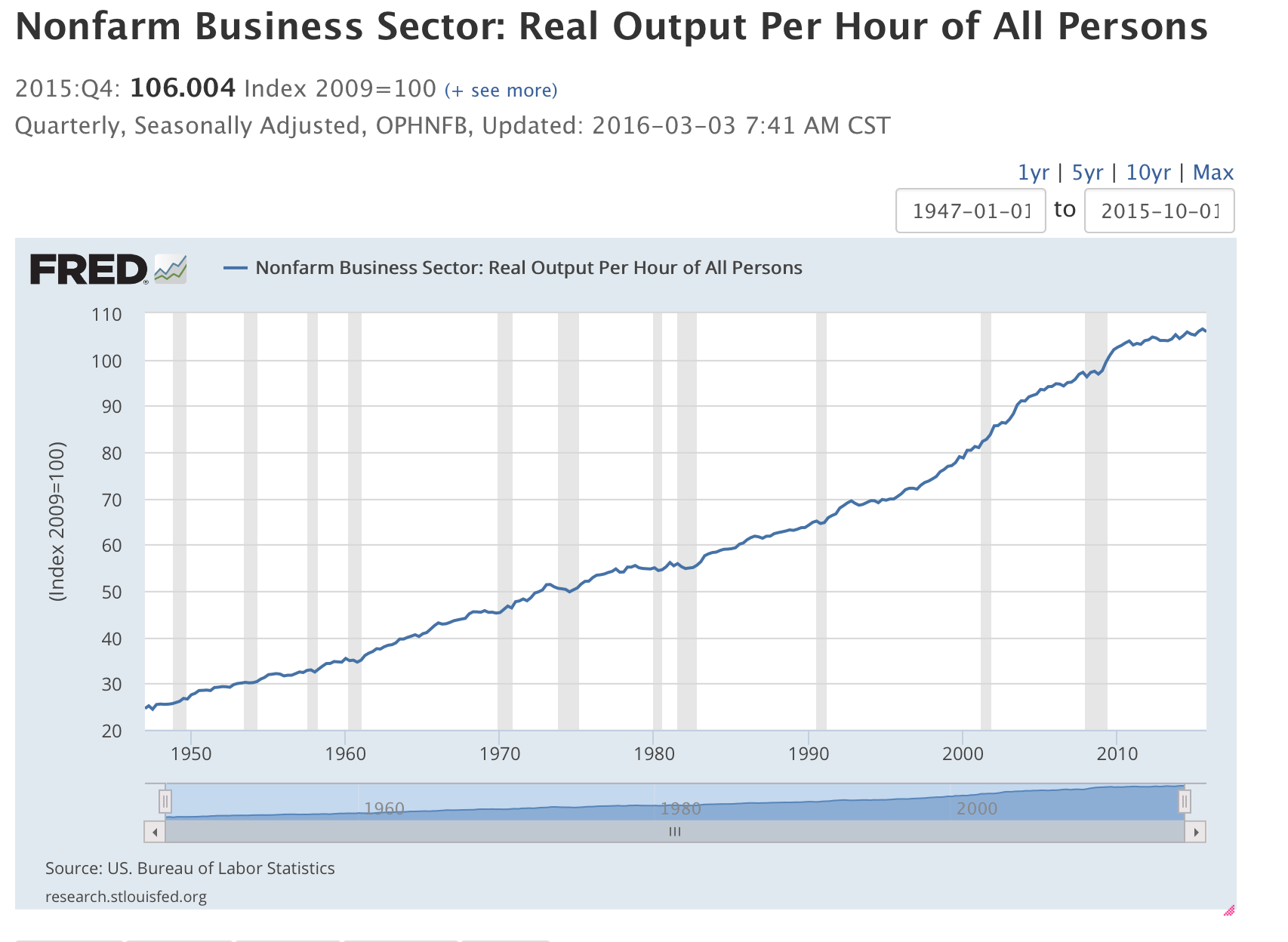
I’ve lost the link — I read way too much — but I was on an economics site that claimed that US factory productivity had not increased at all since the 1950s.
This contradicted everything I’d ever read and every number I’d ever seen, so I decided to look into it more. I’m guessing it was some sort of agenda for justifying why so many jobs had been shipped overseas, but done really well so that it was “obvious” with cooked numbers. More convincing that way if made less clearly ideological.
Dammit, I wish I could find the link.
The mistake or deliberate obfuscation this person made appears to be that they took the BLS numbers of factory output and somehow manually adjusted them to show hours worked per worker without adjusting for decrease in worker number vs. hugely increased output (same number of workers producing far more, in reality). The same number of workers can produce in 2016 1,000 cars a month, and could’ve rolled out only around 200 in 1950. Etc. Anyway, it was completely wrong so if you find it or something like it, please let me know.
So here’s the data as it should actually be calculated. The FRED.
Just manufacturing since 1975:
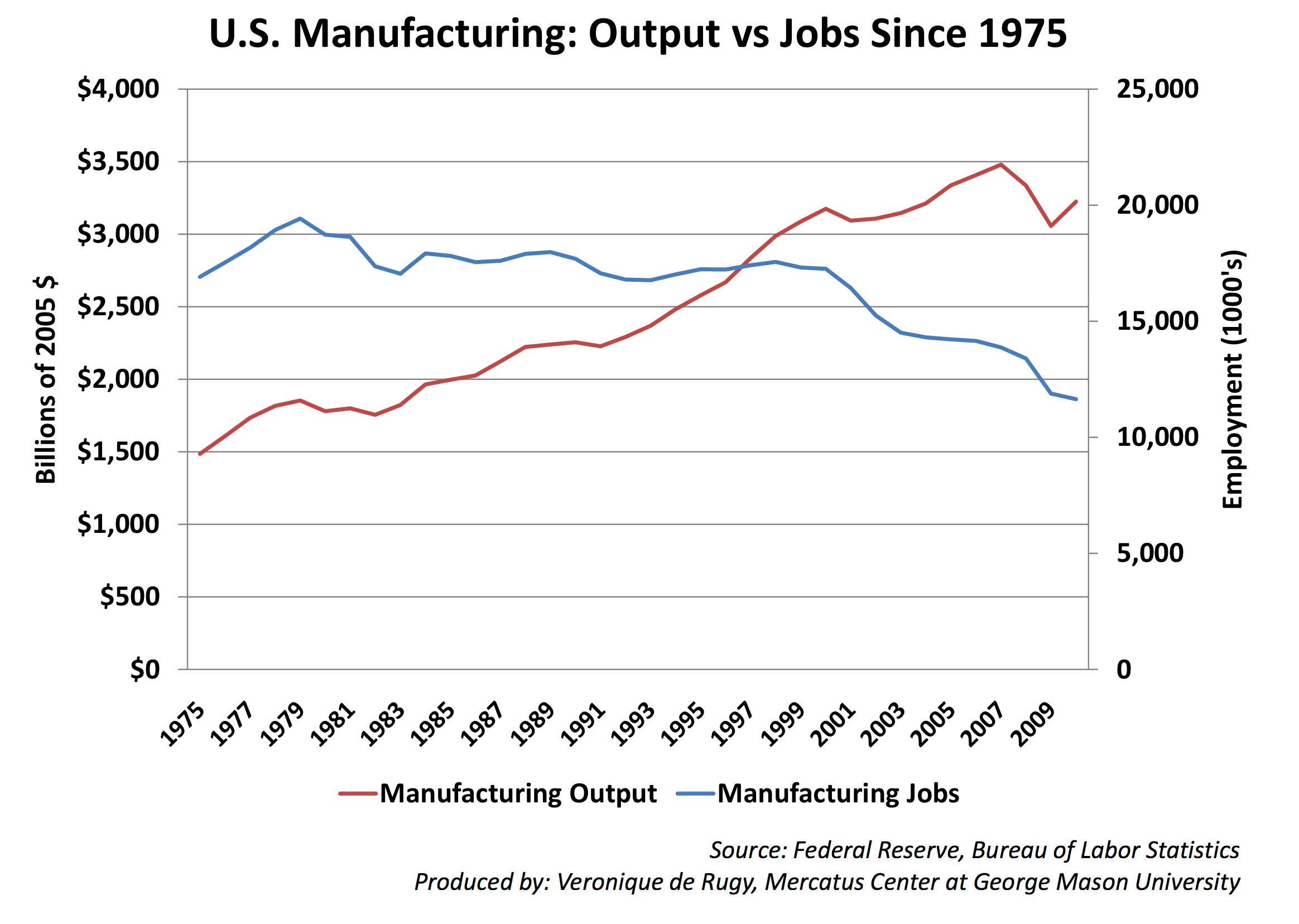
So as you can see we produce much more with much fewer jobs over any series of more than a few years which you care to examine, in any category.